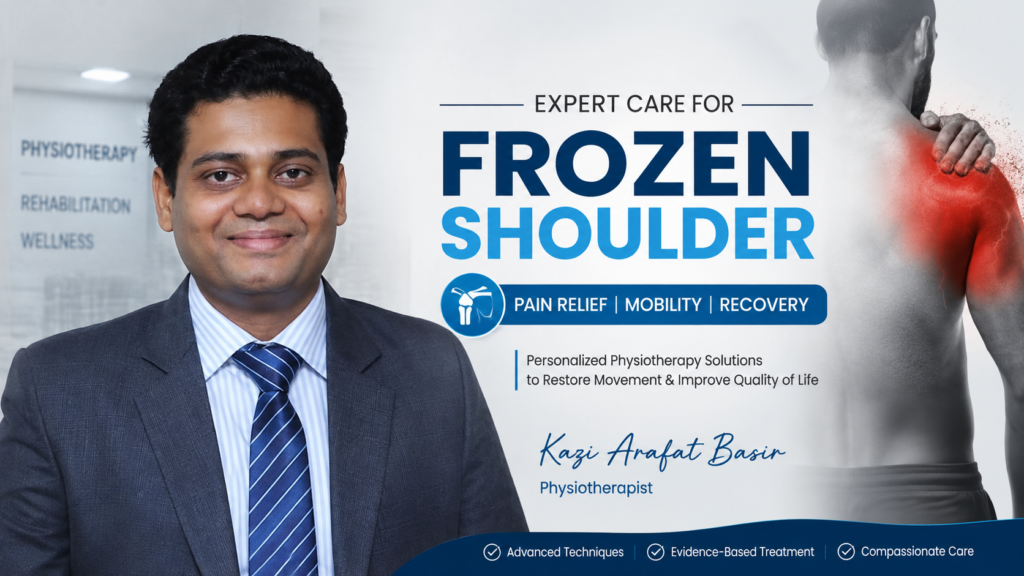
Frozen shoulder is a painful condition that can make everyday movements difficult. Reaching overhead, putting on clothes, combing your hair, or reaching behind your back may become uncomfortable or restricted. Frozen shoulder physiotherapy can play an important role in managing pain, improving shoulder mobility, and supporting recovery.

Frozen Shoulder
Common Symptoms of Frozen Shoulder
The most common symptoms include shoulder pain and stiffness. Patients may find it difficult to move their arm freely, particularly during activities that require reaching overhead or behind the back.
Common symptoms include:
- Persistent shoulder pain
- Increasing stiffness in the shoulder
- Difficulty lifting the arm
- Reduced range of motion
- Pain while sleeping on the affected side
- Difficulty performing everyday activities
- Shoulder discomfort during certain movements
Symptoms can vary from person to person. If shoulder pain or stiffness continues or interferes with daily activities, a professional assessment is recommended.
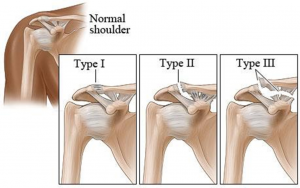
Types of Frozen Shoulders
What Causes Frozen Shoulder?
The exact cause of frozen shoulder is not always clear. It can sometimes develop following a period of reduced shoulder movement, such as after an injury or surgery.Certain health conditions may also increase the likelihood of developing frozen shoulder. However, not everyone with these conditions develops the problem.A physiotherapist can assess the shoulder’s movement, strength, pain level, and functional limitations before recommending an appropriate treatment approach.
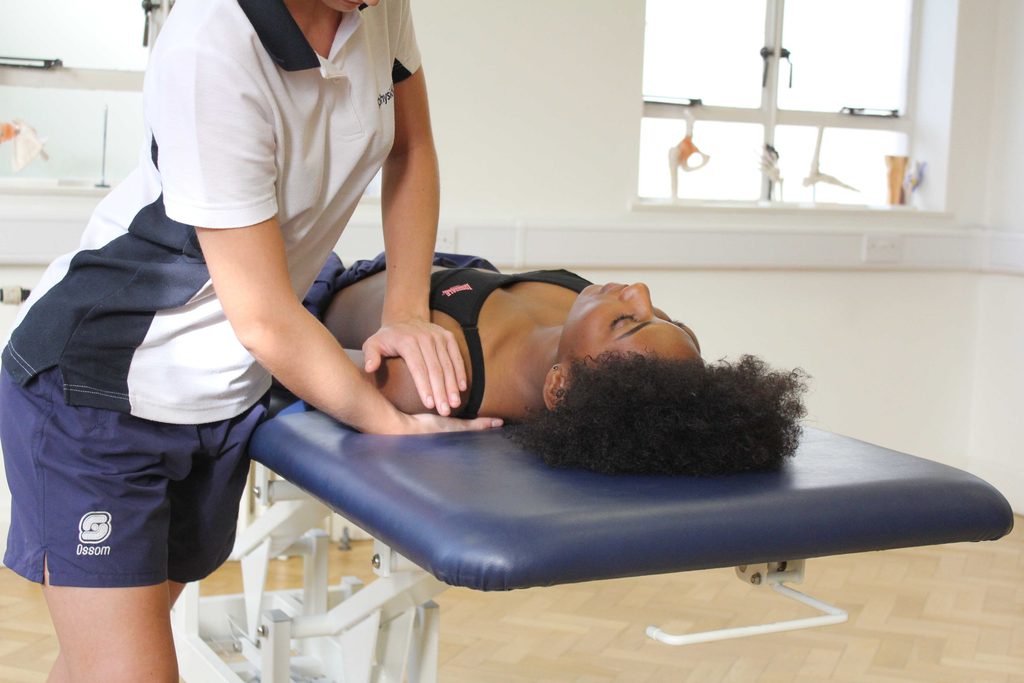
Physiotherapy Treatment for Frozen Shoulder
How Does Frozen Shoulder Physiotherapy Help?
Frozen shoulder physiotherapy focuses on improving mobility while managing pain and stiffness. The treatment plan depends on the individual’s symptoms, stage of the condition, physical abilities, and treatment goals.
Physiotherapy may include:
- Gentle shoulder mobility exercises
- Range-of-motion exercises
- Stretching exercises
- Strengthening exercises when appropriate
- Manual therapy where clinically suitable
- Posture and movement education
- Guidance for safe home exercises
The goal of frozen shoulder physiotherapy is not simply to reduce pain but also to help restore useful shoulder movement for everyday activities.

Physiotherapy Treatment
Understanding Frozen Shoulder Treatment
There is no single frozen shoulder treatment that is appropriate for everyone. Treatment should be based on an individual’s condition and professional assessment.
During the painful stage, treatment may focus more on pain management and gentle movement. As stiffness becomes the main concern, appropriately progressed mobility exercises may become more important. Later, strengthening and functional exercises can help patients return to normal activities.
Consistency is an important part of frozen shoulder treatment. Performing recommended exercises correctly and regularly can support gradual improvements in mobility.

Exercises for Frozen Shoulder
When Should You See a Physiotherapist?
Consider seeking professional advice if shoulder pain or stiffness is persistent, your range of motion is decreasing, or daily activities are becoming difficult.
Early assessment can help identify the possible cause of your symptoms and determine whether frozen shoulder physiotherapy may be appropriate. A physiotherapist can also help differentiate frozen shoulder from other shoulder problems that may have similar symptoms.

Dr. Kazi Arafat Basir
A Personalized Approach to Recovery
At Dr. Kazi Arafat Basir’s practice, physiotherapy is approached according to each patient’s individual condition, functional limitations, and recovery goals. For patients experiencing shoulder stiffness and pain, a personalized assessment can help determine an appropriate frozen shoulder treatment plan.
Recovery from frozen shoulder can take time, and progress may vary from one person to another. With professional guidance, appropriate exercises, and consistency, many patients can work toward improved shoulder mobility and better function.
If shoulder pain and stiffness are affecting your daily life, consult a qualified physiotherapist for an appropriate assessment and treatment plan. Frozen shoulder physiotherapy can be an important part of managing symptoms and supporting a gradual return to comfortable movement.